Muhammadjon Obidov: Lessons of Investigative Journalism

November 11 , 2025
2
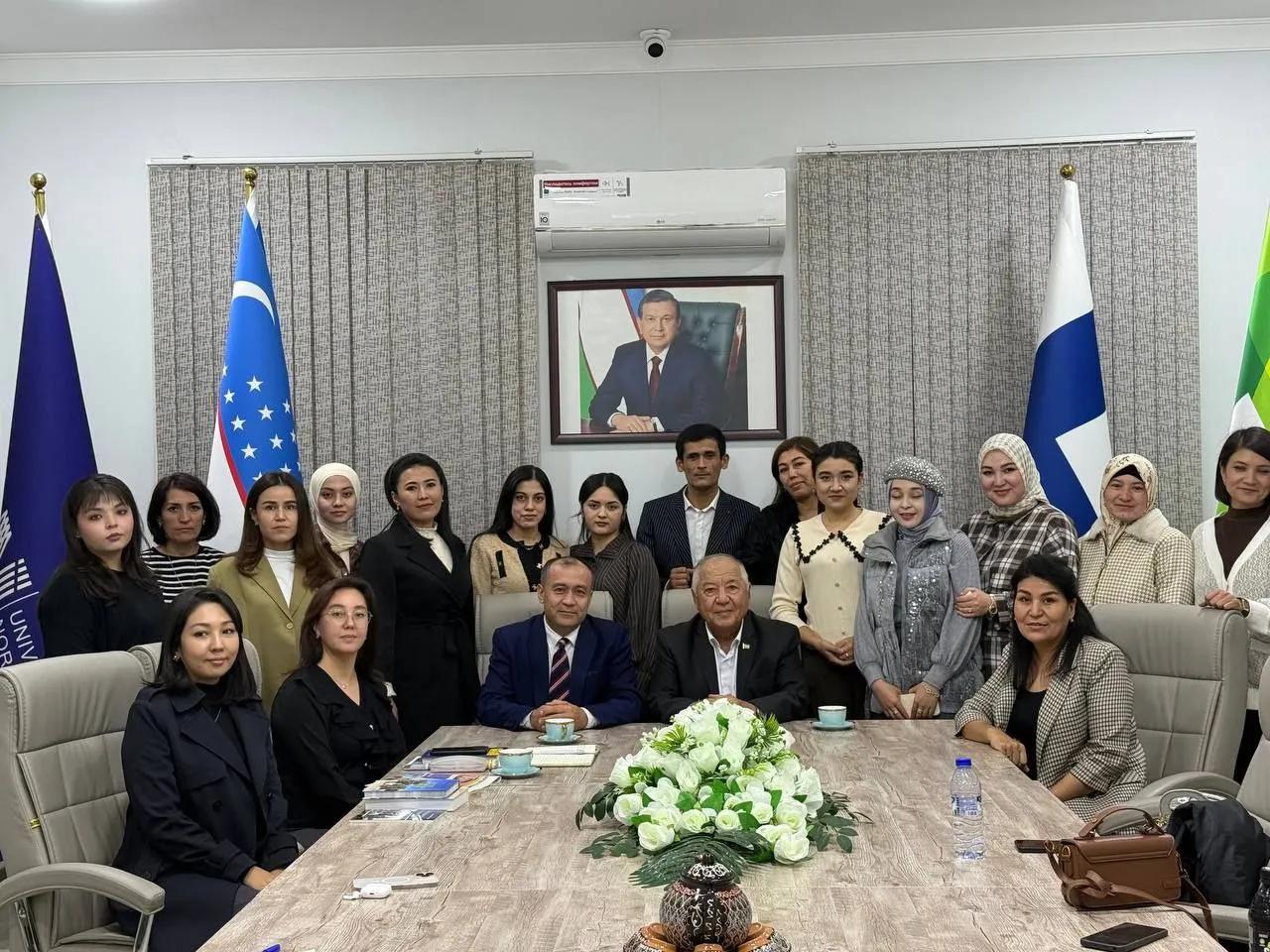
Honored Journalist of Uzbekistan Muhammadjon Obidov held a meeting with students of the Journalism Department. It was not just a lecture — but a true school of journalism and a journey through the vastness of the profession.
“A journalist must stay away from bribery and corruption. A journalist has both power and opportunity — but must never use the pen for revenge. This profession is about serving justice with integrity.”
The veteran journalist spoke about his impactful investigative works carried out during his career at Axborot Directorate, O‘zbekiston ovozi, Farg‘ona haqiqati, Ferganskaya Pravda editorial offices, and the National News Agency of Uzbekistan (UzA). He shared vivid examples of their results, consequences, and influence.
Students analyzed articles, watched video materials, and explored the challenges, risks, courage, and responsibility behind each investigation through powerful examples.
Quotes:
• A journalist relies on facts, not on noise.
• Investigation is courage — but every word carries responsibility.
• Maintaining impartiality amid conflicting interests is the mark of true professionalism.
• Every piece must have its own style, not follow a template.
• It is truth, not propaganda, that makes a journalist strong.
Muhammadjon Obidov, who has visited nearly 40 countries during his career, also shared his experiences as the author of several books such as Fergana Journalism and The Journalist’s Investigation. He donated some of his key works to the Nordic Library as a gift for journalism students.
This meeting gave students a broad understanding of the past, present, and future prospects of journalism. The mentor emphasized one particular piece of advice:
“Train a student. Knowledge and experience should not end with you — let them live on in others.”
Latest news

Nordic Rector Meets with Researchers
The university leadership is creating a supportive academic environment for them, providing scientific supervision and opportunities for professional development.
With the aim of supporting young scholars, Rector Sherzod Mustafakulov held an open dialogue with researchers and doctoral students.
During the meeting, current research topics, opportunities for publishing articles in prestigious internationally indexed journals, participation in grants and projects, as well as issues related to enhancing the scientific potential of doctoral students and providing them with systematic support were discussed in detail.

A New Resource for Future Finance Professionals
It consistently presents the principles and functions of taxation, the tax base and rates, as well as calculation and payment mechanisms, illustrated with real-life examples.
The textbook is a systematic, practical, and up-to-date resource designed to develop solid knowledge and professional competencies among students studying economics, finance, and accounting.
Author: Zafarjon Abdullayev

Training Week: A Platform for Professional Growth for Nordic Educators
The trainings delivered by experienced trainers—covering artificial intelligence and digital education, gamification and innovative methods, assessment, and lesson planning—are serving as a strong platform for educators’ professional development.
The practical sessions provide broad opportunities for teachers to update their knowledge and skills.

The 12th Meeting of the NIU Council: Review of 2025 and Prospects for 2026
First, reports were presented by responsible officials on the agenda item “Review of scientific research activities carried out at the university in 2025 and approval of the 2026 plan.” The effectiveness of research activities, the quality of publications and studies, and the results achieved in priority scientific areas were analyzed. Goals and performance indicators for 2026 were defined.
The Council also reviewed and approved a number of important documents regulating the educational process, including regulations, a Roadmap, and guidelines.
In particular, the newly adopted guidelines on the use of artificial intelligence established procedures for the responsible, transparent, and effective use of modern technologies in education and scientific research.
During the meeting, several other issues were considered, such as the submission of documents for obtaining the academic title of professor; the results of surveys conducted among students and staff (including a problem bank, proposals, and conclusions); and recommendations for publishing educational materials developed by faculty members.
As a result of the meeting, important decisions were adopted aimed at strengthening the integration of scientific governance, academic quality, and innovative approaches at the university. Tasks were set for 2026 to increase the effectiveness of research activities and to elevate the quality of education to a new level.
At the meeting, faculty members who achieved notable scientific accomplishments and received recognition during the year were warmly honored and congratulated on their successes.
