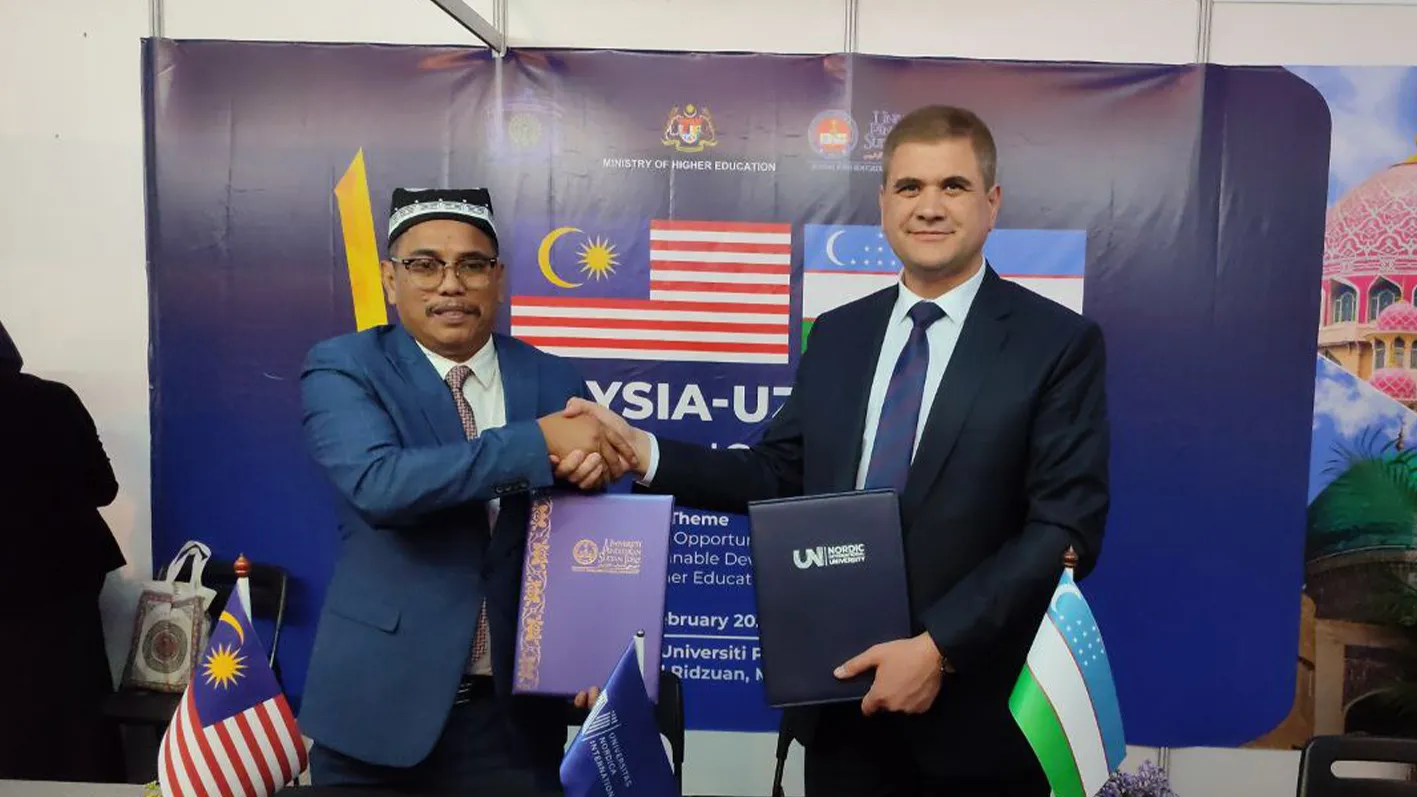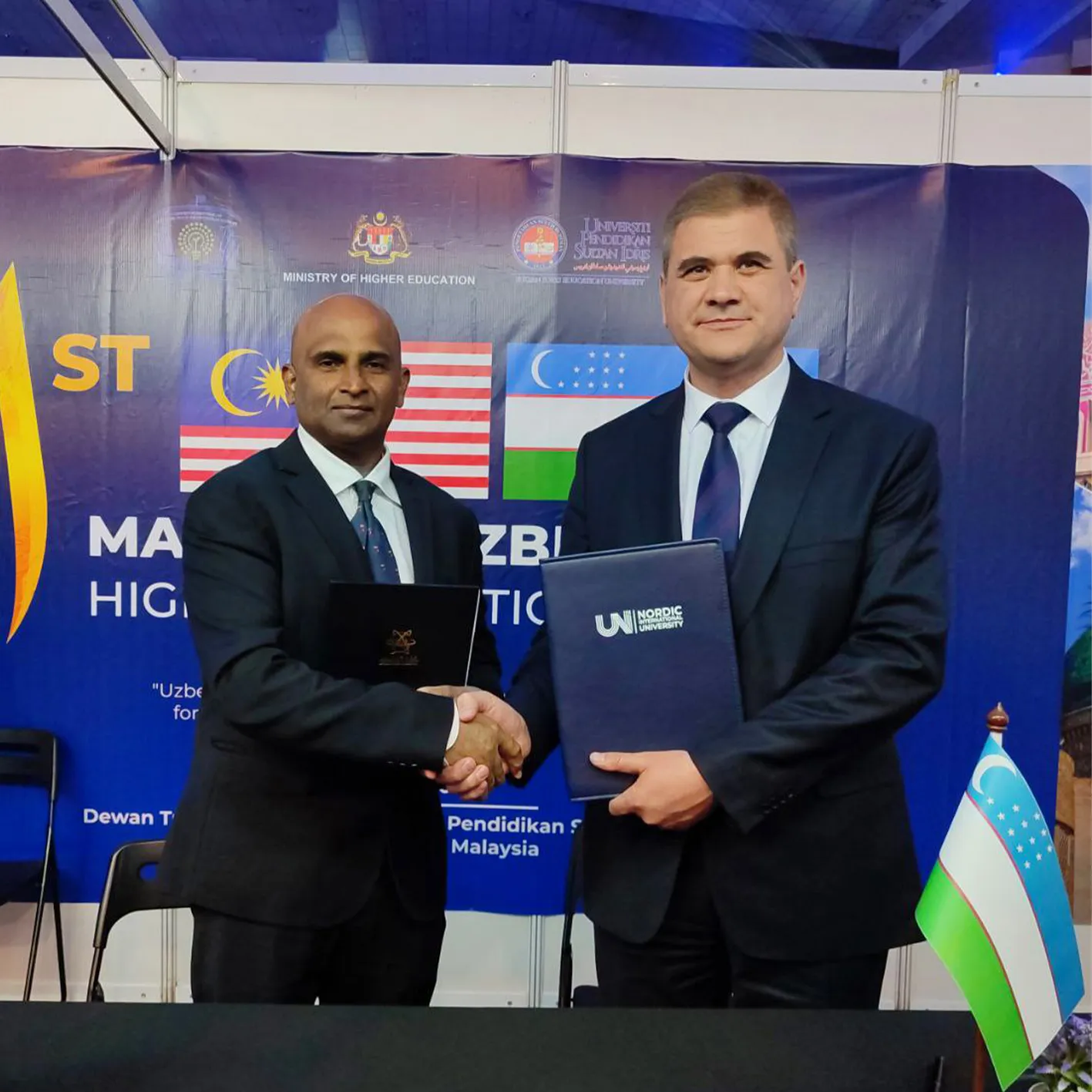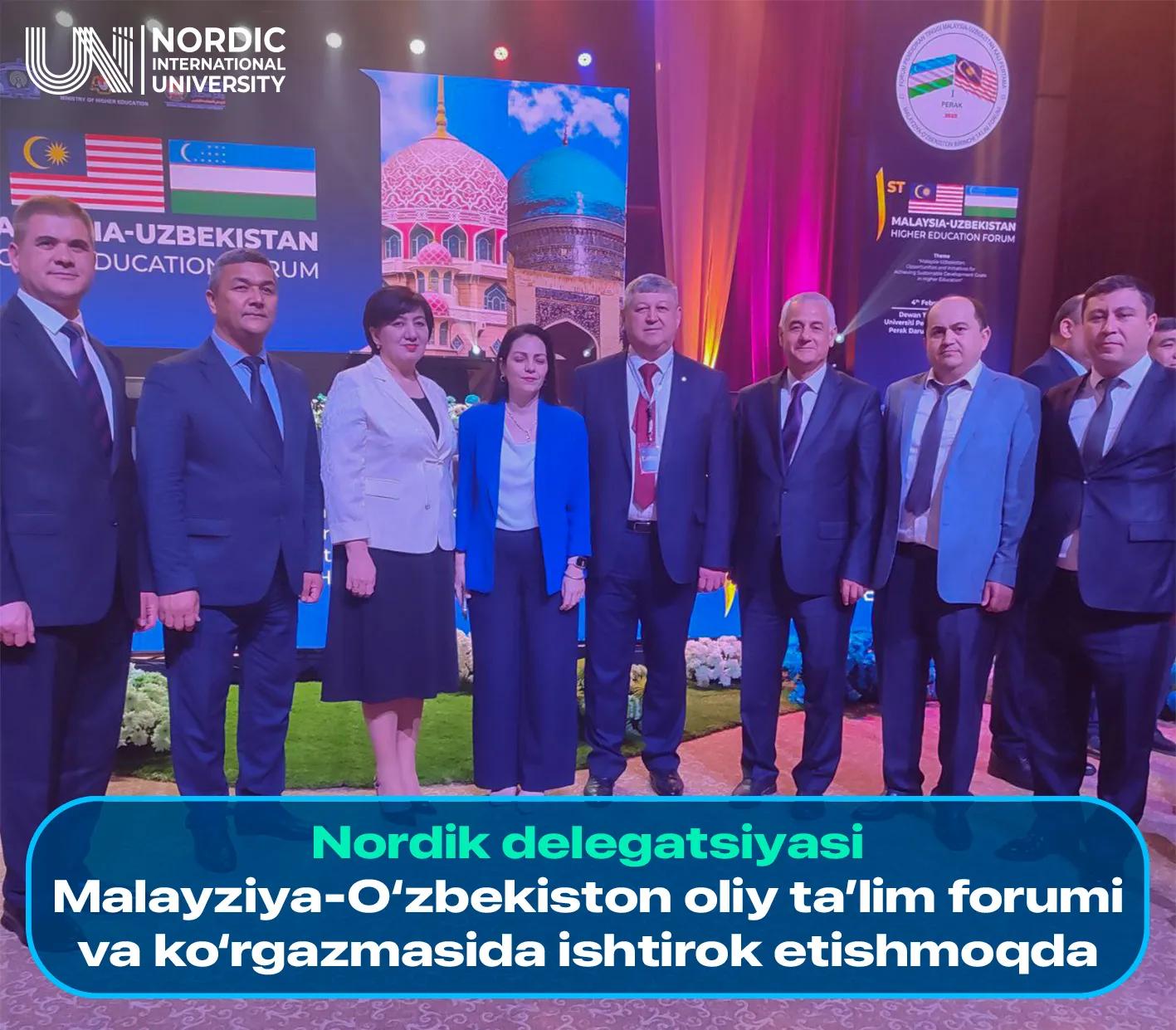
The delegation of Nordic International University is currently on an educational visit to Malaysia

The delegation of Nordic International University is currently on an educational visit to Malaysia

February 04 , 2025

|

1390

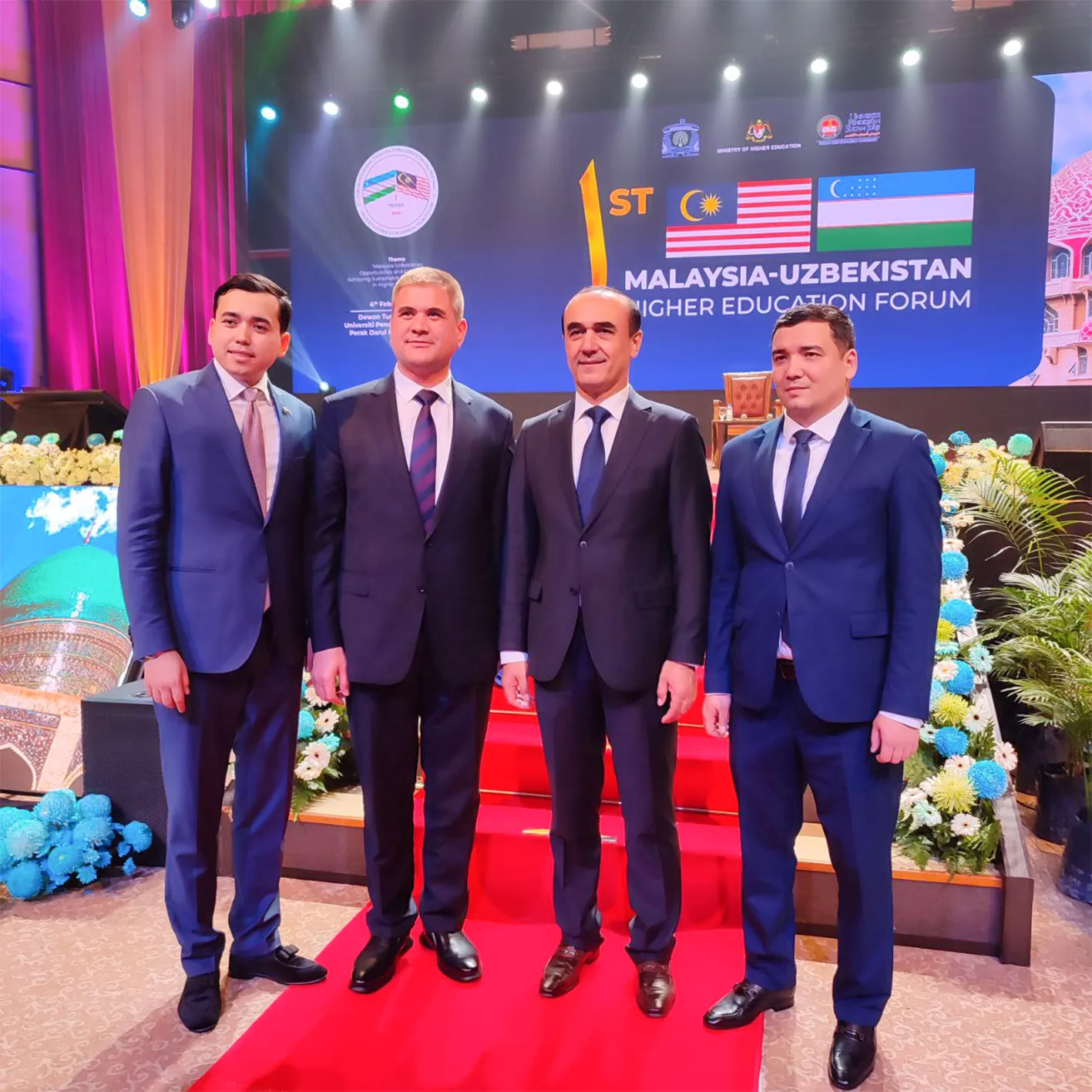
The first Uzbekistan-Malaysia Education Forum, organized by the higher education ministries of both countries, is being held on the topic of "Opportunities and Initiatives in Higher Education to Achieve the Sustainable Development Goals."

During the prestigious opening session, the national anthems of both countries were played, and cultural performances were presented.


The Minister of Higher Education, Science, and Innovation of the Republic of Uzbekistan, Kognirotboy Sharipov, and the Minister of Higher Education of Malaysia, Zambry Abdul Kadir, emphasized the strong collaboration between the two countries in the field of higher education.


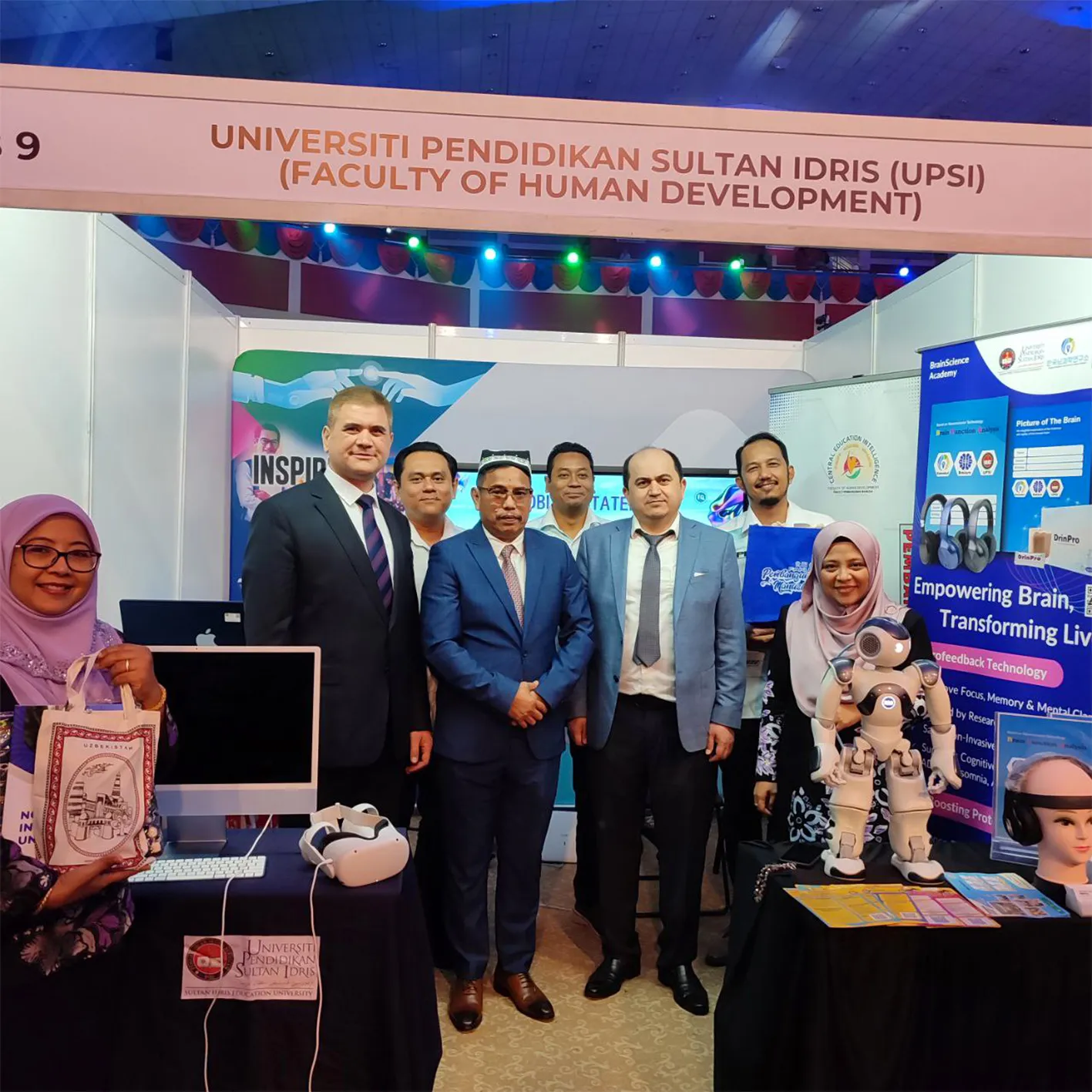
Within the framework of the forum, cooperation memorandums were signed between Nordic International University and several prestigious institutions, including the Asia Pacific University of Technology and Innovation (APU), Sultan Idris Pedagogical University (UPSI), and Utara University (UUM) in Malaysia.


Negotiations are being held on promising directions such as engaging Malaysian youth in joint educational programs, supporting their continuation of studies in Finland, student exchange programs, and implementing faculty training initiatives.


Additionally, agreements are being reached to organize the "Uzbekistan-Malaysia Business and Education Forum" in Tashkent and to implement projects that provide convenience for students in collaboration with foreign investors.
Artboard-14-13
Preview
Artboard-13-15
Preview
Artboard-21-5
Preview
Artboard-16-10
Preview
Print

Latest news

Uzbekistan’s Intellectual Potential Showcased at the Final Stage of “TasIMO–2026”

Uzbekistan’s Intellectual Potential Showcased at the Final Stage of “TasIMO–2026”

The project was initiated by the International Nordic University and the IDC Educational Center in cooperation with the Ministry of Higher Education, Science and Innovations of the Republic of Uzbekistan, the Ministry of Preschool and School Education, UNICEF, the United States’ Rowan University, and Finland’s Karelia University of Applied Sciences.


This prestigious initiative served not only as an intellectual competition among gifted students, but also as a practical reflection of Uzbekistan’s policy of openness in international education, academic integration, and intellectual diplomacy.


The final stage brought together 150 talented young mathematicians selected from all regions of Uzbekistan, alongside more than 200 participants from numerous countries, including the United States, Germany, the United Kingdom, Russia, Kazakhstan, Pakistan, and Bulgaria. As a result, the Olympiad evolved into an influential international platform fostering scientific and intellectual collaboration among young people from different nations.


The general sponsor of the event was Asia Alliance Bank, while media partners included UzReport TV, as well as the newspapers “Xalq so‘zi” and “Narodnoye slovo.”


The Olympiad programme was designed as a three-day large-scale intellectual festival aimed at identifying and supporting gifted youth, preparing them for international academic competitions, and developing their logical thinking, strategic decision-making, and analytical reasoning skills.

The final stage officially commenced on 19 May, when participants were assigned to examination halls according to their grade levels and the competition rounds began. Students in grades 3–9 completed a 90-minute contest, while participants in grades 10–11 undertook a demanding four-and-a-half-hour mathematical challenge. The tasks were specifically designed to assess logical reasoning, algorithmic thinking, and analytical competence.


Fairness, transparency, and impartiality were established as the core principles of the Olympiad process. More than 25 distinguished jury members made significant contributions to ensuring the high standard of the competition. In particular, international experts such as Alexander Antropov, Patrik Bak, Ivan Chan, David Hruška, Vlad Matei, and Marek Murin, together with many other dedicated professionals, worked tirelessly throughout the assessment and appeals procedures with exceptional professionalism and objectivity. The appeals committee remained active until late evening hours, further strengthening trust among participants, teachers, and parents.


One of the defining features of “TasIMO–2026” was that it provided participants not only with an academic competition environment, but also with opportunities for social and personal development. Within the framework of the Olympiad, participants engaged in problem-analysis sessions, appeal discussions, intellectual exchanges, and interactive workshops that encouraged independent thinking, critical analysis, and self-improvement.

In addition, sports competitions, the intellectual game “Zakovat,” concerts and entertainment programmes, kite flying, tug-of-war contests, team-based activities, nature excursions, a “Pizza Party,” and interactive events inspired by the format of the “Squid Game” contributed to the development of leadership, teamwork, and communication skills among participants.


In today’s modern educational landscape, high academic achievement alone is no longer considered sufficient; emotional intelligence, social adaptability, and global thinking have become equally important indicators of success.


At the final stage of the Olympiad, Uzbekistan’s young mathematics talents achieved remarkable results, securing 9 out of 12 gold medals, 10 out of 15 silver medals, 12 out of 18 bronze medals, and 24 out of 75 “Honourable Mention” certificates. These outstanding achievements clearly demonstrate the strong intellectual potential and academic excellence of the country’s younger generation.

TasIMO–2026: A Healthy Competition in the Realm of Intellect and Reason

TasIMO–2026: A Healthy Competition in the Realm of Intellect and Reason

The page highlights the atmosphere of the final stage of the olympiad, its growing international prestige, and the inspiring journeys of young mathematicians toward success.


Readers will discover articles and reports dedicated to the mission and significance of the international olympiad, Uzbekistan’s latest achievements in education, the impressions of local and international winners, the aspirations of talented students, and the emergence of a global culture of thinking shaped through mathematics.


The publication clearly demonstrates how “TasIMO” is steadily evolving into a major international intellectual platform. Particular emphasis is placed on Uzbekistan’s open educational policy, the broad opportunities being created for young people, and the importance of international academic cooperation.


The participation of gifted students not only from all regions of Uzbekistan, but also from countries such as the United States, Germany, the United Kingdom, Russia, Kazakhstan, Pakistan, and Bulgaria further strengthened the international prestige of the competition.

It is also noteworthy that the events of the TasIMO Olympiad attracted considerable attention from the wider public, including young Uzbek leaders who are achieving international success in various fields.


Among them is distinguished Uzbek chess grandmaster, recipient of the “Pride of Uzbekistan” medal and the “Mehnat Shuhrati” order, International Master and 2026 Chess Player of the Year, Javokhir Sindarov. The newspaper features his heartfelt wishes to the finalists as well as valuable advice drawn from his own remarkable path to success.


📖 Full details can be found in today’s — May 22 edition of “Xalq so‘zi.”

The Helsinki Experience: New Pathways of Development for Tashkent and Nordic

The Helsinki Experience: New Pathways of Development for Tashkent and Nordic

 In today’s educational agenda, such priorities as human capital development, the quality of early childhood education, teacher professional growth, and AI-powered governance systems are gaining strategic importance.


Against this backdrop, the delegation — accompanied by Helsinki Deputy Mayor for Education, Shawn Huff — visited the “Meri” Kindergarten and Vattuniemi Primary School, where they closely examined Finland’s child-centred educational approach, creative learning environment, and individualized teaching practices. During the discussions, agreements were reached on adapting these advanced experiences to the educational system of Tashkent.


Meetings held at the Helsinki City Administration also focused on urban strategy, modern educational governance, and innovative mechanisms of international cooperation. Particular attention was given to the prospects of introducing Finland-inspired strategic management models within Tashkent’s educational ecosystem.


During negotiations at the educational organisation “Edulyzer,” the delegation was introduced to an AI-driven platform capable of monitoring students’ discipline, psychological well-being, and academic performance. The system is especially valuable for fostering a safe and healthy educational environment, as well as for the early detection of stress and social challenges among children. Initial agreements were reached regarding the implementation of this platform in educational institutions across Tashkent.


In addition, meetings with representatives of the University of Helsinki and its lifelong learning centre “HY+ Ltd” marked the beginning of a new stage of international cooperation for the International Nordic University.


During the visit, Vice-Rector for Research and Innovation, Odil Qo‘ysinov, delivered a presentation on the university’s history, international partnerships, and future strategic vision. The parties achieved several important agreements in the fields of scientific collaboration, student exchange programmes, and professional development for educators, which were formally reinforced through the signing of a memorandum of cooperation.

This visit laid a solid foundation for strengthening Nordic University’s global academic integration, introducing Finland’s advanced educational practices to Uzbekistan, and building a modern pedagogical ecosystem.


Overall, the Helsinki visit concluded with promising practical outcomes for both Tashkent and the International Nordic University in the areas of innovative educational governance, the integration of artificial intelligence technologies, and the expansion of international academic collaboration.

Advancing Tourism Through Science — A Key Driver of Sustainable Development

Advancing Tourism Through Science — A Key Driver of Sustainable Development

The event brought together Chairman of the Tourism Committee of the Republic of Uzbekistan Abdulaziz Aqqulov, industry experts, and leading scholars.


During the meeting titled “The Harmony of Government, Science, and Practice in Tourism: A Guarantee of Sectoral Development and Economic Growth,” participants discussed the Tourism Development Strategy for 2026–2030, the country’s long-term tourism development model, and emerging global trends shaping the modern tourism industry.


As emphasized throughout the discussion, today’s tourism sector is entering a new phase driven by artificial intelligence, digital platforms, sustainable approaches, the “experience economy,” and personalized travel concepts. In this evolving landscape, competition between nations is no longer defined solely by historical heritage or natural resources, but increasingly by innovation, service quality, and intellectual products.


The meeting also featured active participation from professors and scholars of the International Nordic University. University Vice-Rector Muhammadsiddiq Amonboyev introduced several forward-looking initiatives aimed at strengthening the scientific foundation of tourism development.


Among the proposals presented were:


➖ launching scientific grant competitions under the Tourism Committee to address practical challenges in the sector through evidence-based research;


➖ establishing an International Tashkent Tourism Olympiad for university students, financed by the Tourism Committee and organized annually on an international scale. The initiative aims to attract teams from across the globe, promote Uzbekistan’s tourism potential more broadly, foster innovative solutions to industry challenges, and expand MICE tourism opportunities;


➖ introducing mathematics as a core subject in entrance examinations for tourism-related higher education programs instead of history. It was noted that this initiative would help prepare highly qualified specialists with strong analytical, economic, and managerial competencies in tourism studies.


The initiatives proposed by the International Nordic University are regarded as an important step toward elevating scientific research, innovation, and international cooperation within Uzbekistan’s tourism sector to an entirely new level.

Follow the official channel on Telegram

Subscribe to our YouTube channel

Follow our page on Facebook

Connect with our LinkedIn profile