


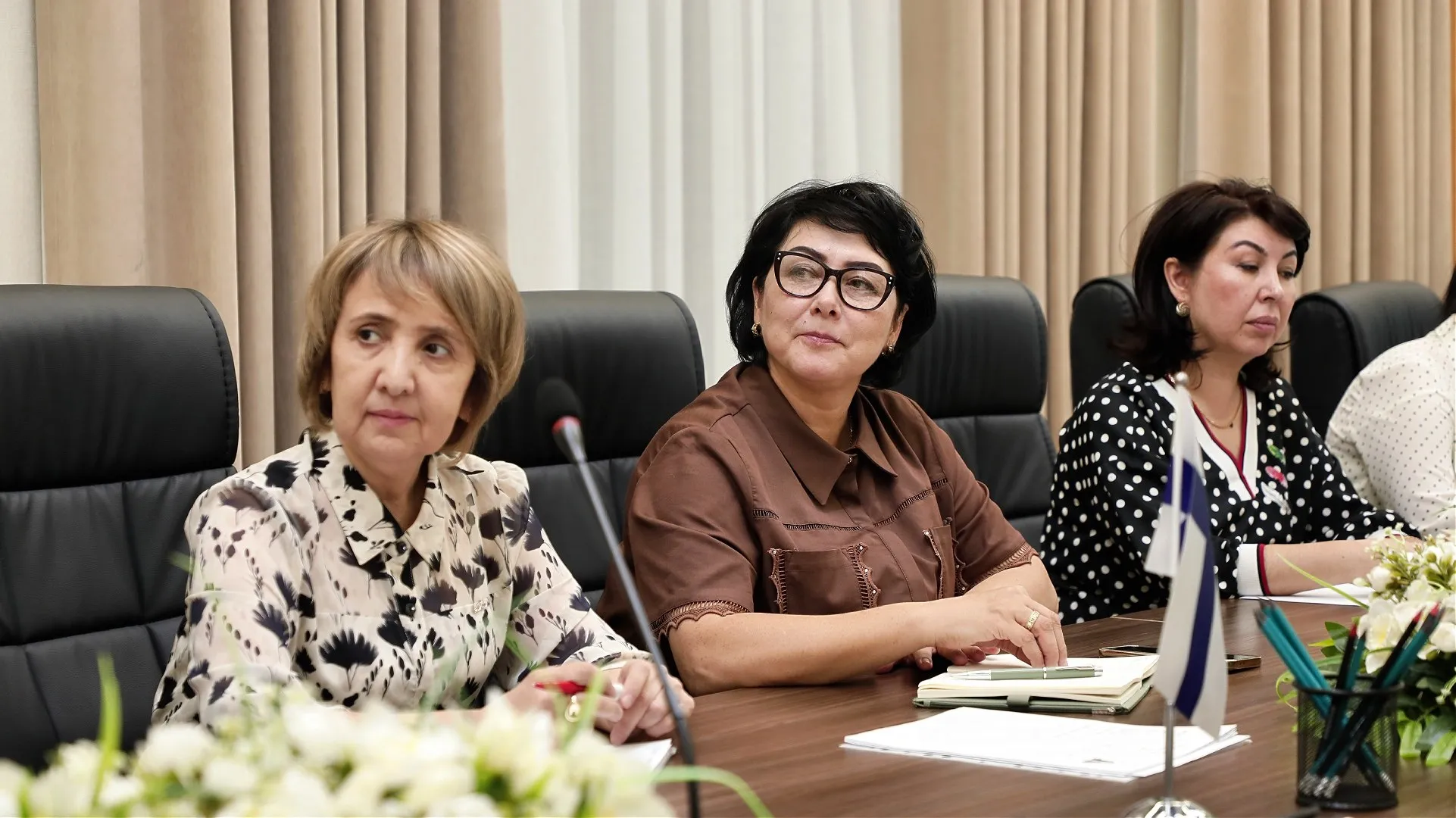
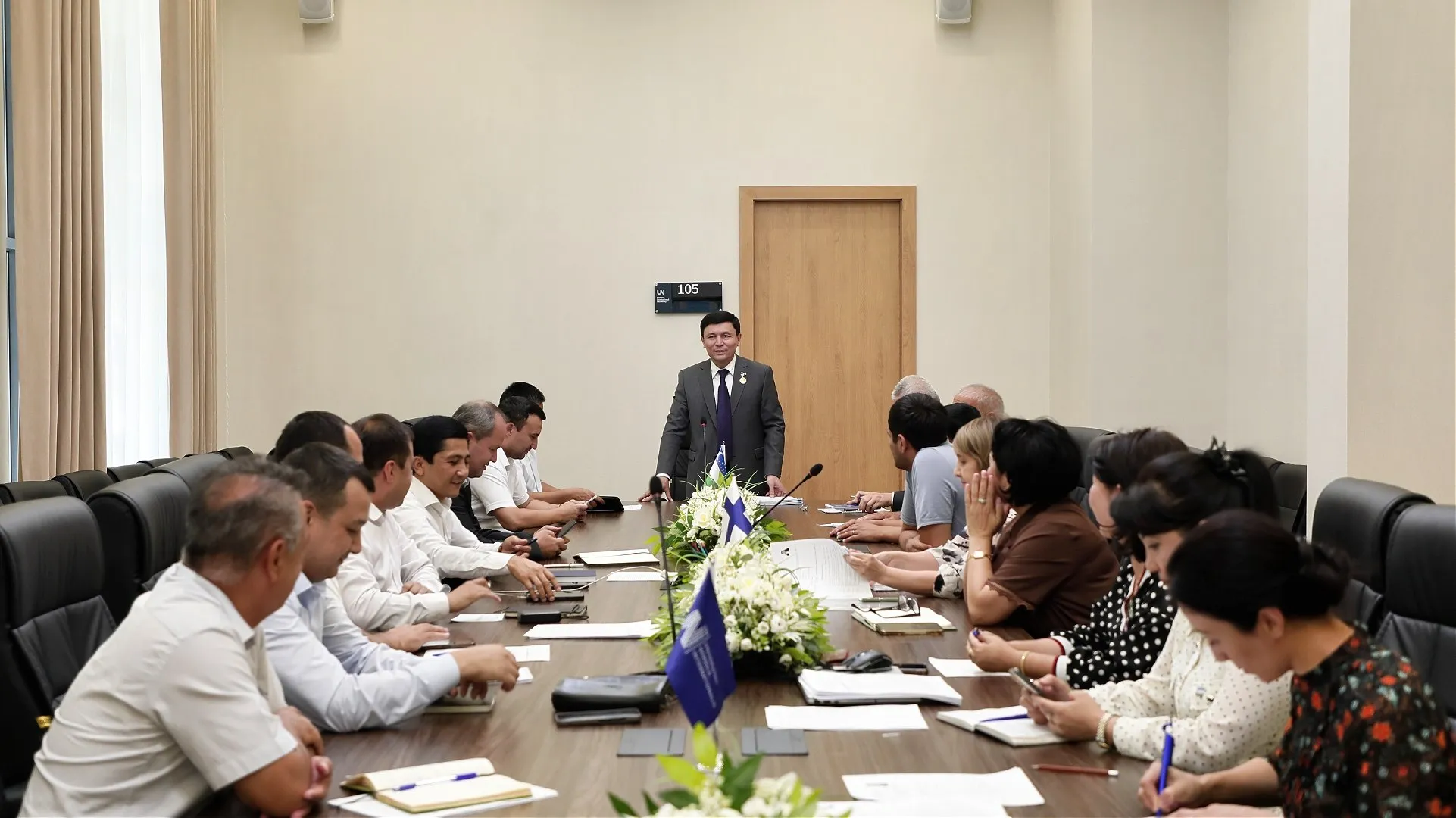
At the outset of the meeting, the Chair of the Council and Rector of Nordic International University, Professor Sherzod Mustafakulov, was warmly congratulated on being awarded the prestigious “35th Anniversary of the Independence of the Republic of Uzbekistan” Commemorative Badge, established to mark the 35th anniversary of Uzbekistan’s independence.
The Council then proceeded to the substantive items on the agenda. Particular emphasis was placed on establishing a strong academic foundation for the new academic year, enhancing educational processes in line with contemporary requirements, and systematically designing, measuring and continuously improving performance outcomes.
In particular, departmental teaching loads, curricula, qualification requirements and course syllabi were reviewed. The alignment of these academic documents with educational quality standards, labour-market needs and contemporary professional competencies was identified as a key benchmark.
The Council also reviewed the outcomes of the 2025/2026 academic year, the assessment of faculty performance based on Key Performance Indicators (KPIs), and the determination of relevant performance-based allowances. Particular emphasis was placed on strengthening the intrinsic link between professional effort, measurable outcomes and appropriate recognition and incentives.
It was underscored that the systematic evaluation of academic, teaching and organisational achievements is essential for enabling faculty members to fully realise their potential, recognising individual accomplishments and enhancing the overall institutional effectiveness of the University.
With regard to the digital transformation of academic processes, particular attention was devoted to the development and monitoring of course syllabi and individual faculty work plans through a new digital platform, as well as to strengthening analytical oversight and performance monitoring.
The Council also approved a proposal to organise seminars and professional development workshops for faculty members on the effective use of new digital platforms and artificial intelligence tools.
The agenda further included an analysis of the results of a survey conducted among graduates. The survey examined graduates’ levels of satisfaction with the quality of education, their employment status and their plans for further study. This approach makes it possible to assess educational quality not merely through classroom-based processes, but also through their ultimate outcomes — graduates’ professional success, employability and continued personal and academic development.
The Council also considered matters related to recommending faculty-authored educational materials for publication, supporting academic and pedagogical capacity development, and facilitating the process of obtaining the academic title of Associate Professor.
At Nordic, preparations for the 2026/2027 academic year are being undertaken with a clear focus on anticipating, measuring and continuously improving educational outcomes.



Follow Nordic on social media