From Idea to Startup: From the Classroom to Practice

January 20 , 2026
1545
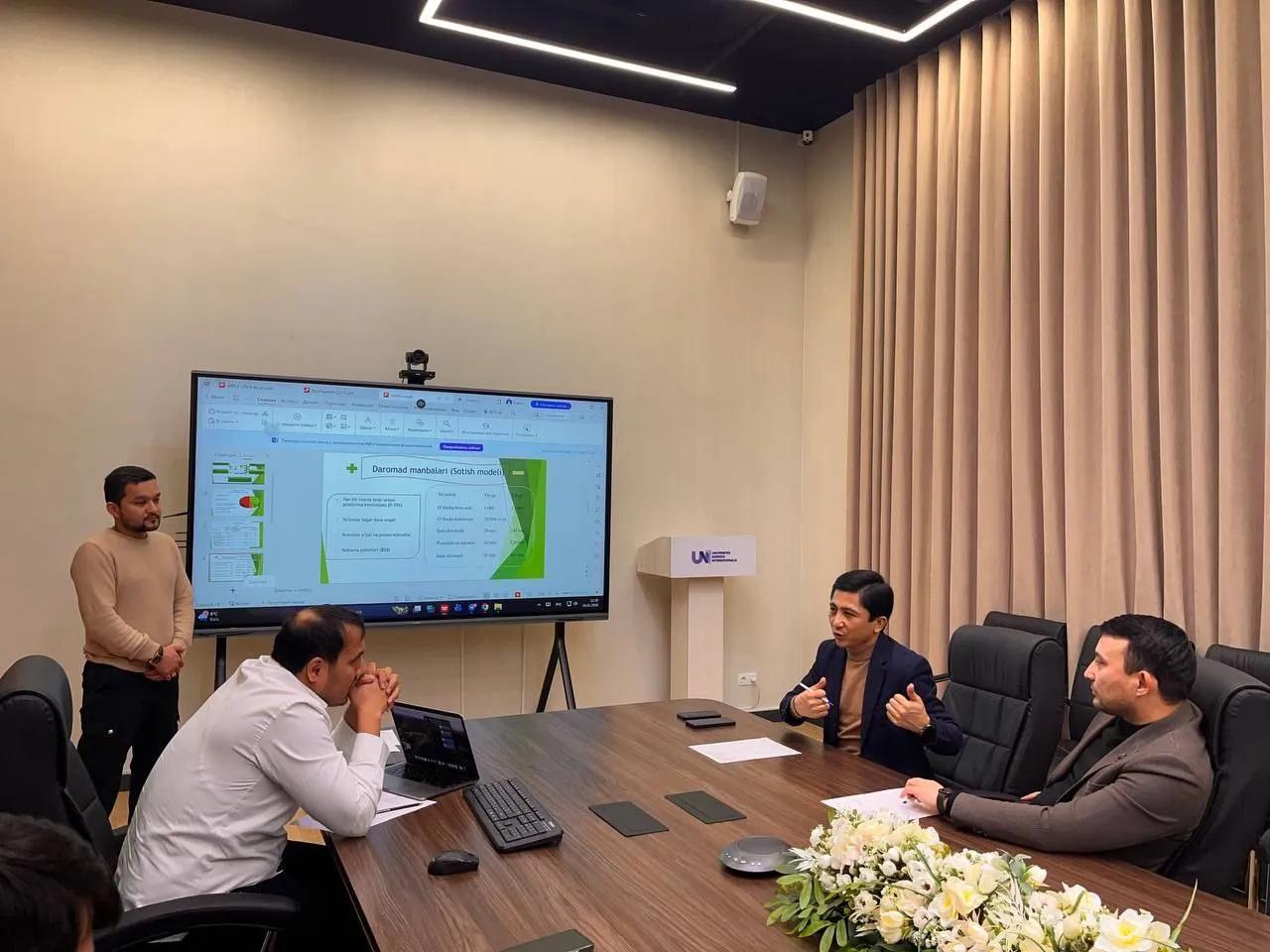
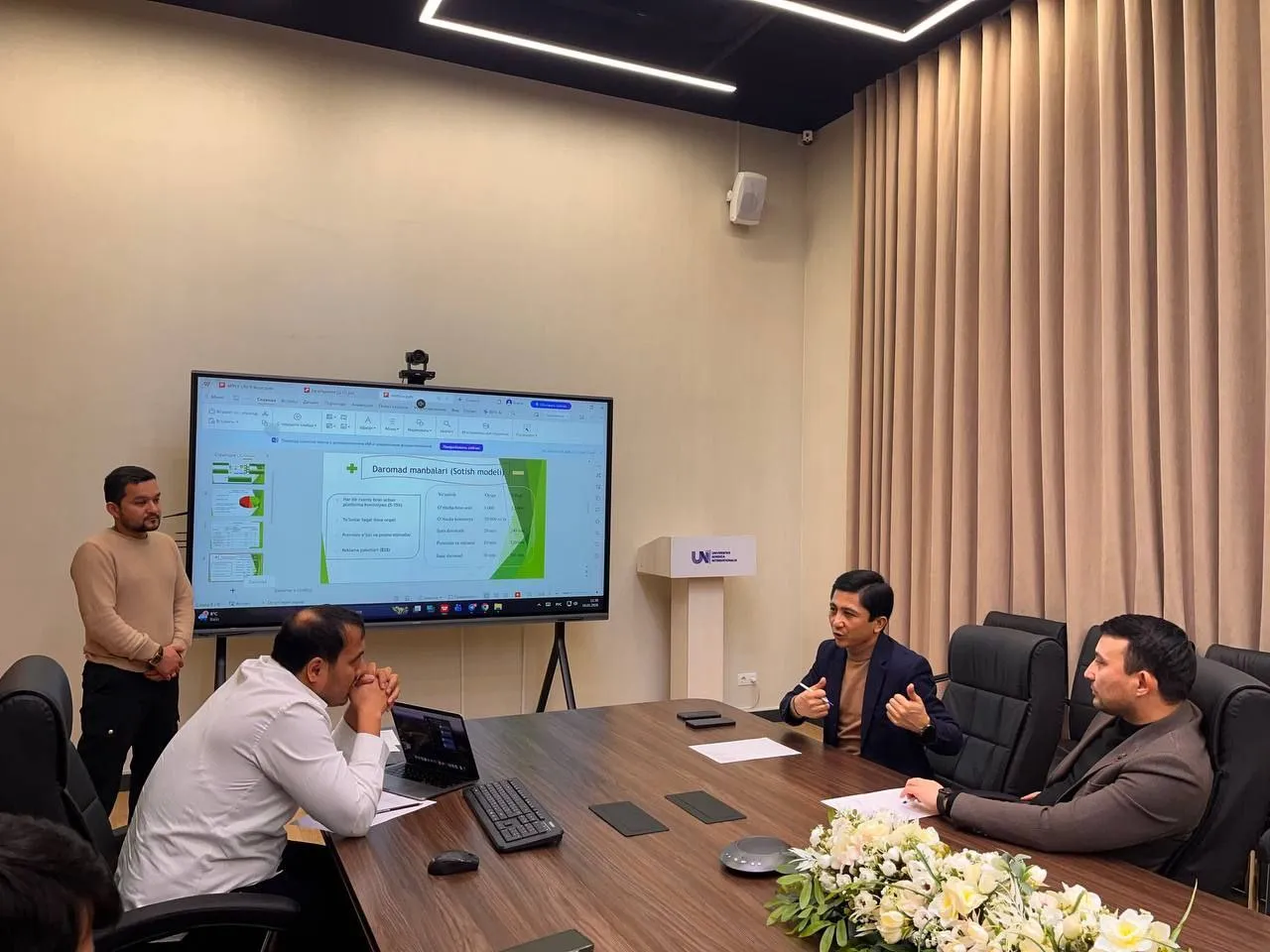
In the current semester, within the course “Design Thinking and Service Design,” the final assessment for students was organized in the form of a startup pitch competition.
As their final project, students worked on startup ideas based on real-world problems — analyzing consumer needs and market demand, and transforming ideas into functioning business models.
During the defense, special attention was given to:
• the relevance of the idea and the problem it addresses,
• alignment with market needs and the value created for users,
• monetization strategies,
• revenue generation,
• initial costs and financial justification.
The defense process became a gateway into the startup ecosystem for students. One student’s project was accepted into the UzCombinator acceleration program.
Several students also registered their projects for the “Mirzo Ulug‘bek Vorislari” innovation competition.
This experience enabled students to turn academic assignments into real projects, test their knowledge and skills in practice, and define their future entrepreneurial paths.
The goal of the course is to develop specialists who can solve real problems, understand the market, and economically justify their ideas.
The results speak for themselves:
📈 increased student interest in startups
🚀 well-directed practical preparation
Going forward, these projects will be further developed and implemented in practice.
Latest news

The Legacy of Amir Temur in the Minds of Youth
During the roundtable discussion, renowned Temur studies scholar, Candidate of Historical Sciences, and Professor Akbar Zamonov delivered an in-depth and analytical presentation. He elaborated on the personality of Amir Temur, his unique approaches to state governance, and the enduring relevance of his historical legacy in the modern world.
The primary objective of the event was to strengthen a sense of historical awareness and national pride among young people, while fostering key qualities such as strategic thinking, leadership, and responsibility through the example of Amir Temur.
The meeting featured an analytical lecture followed by an interactive Q&A session and open dialogue with students. This engagement not only enriched participants’ historical knowledge but also encouraged independent and critical thinking.
Students from the university’s History and Journalism programs actively participated in the roundtable discussion.

International Dialogue: Integrating Analysis and Education
During the visit, a substantive exchange of ideas took place with the esteemed guest — an international expert possessing extensive experience in journalism and educational management. The discussions focused on key global education trends, contemporary governance approaches, and emerging models of academic development, while also outlining prospective avenues for collaboration.
Particular attention was given to launching joint initiatives, including the organization of international conferences, the development of sustainable solutions, and the creation of evidence-based practical frameworks. The dialogue also emphasized knowledge exchange and the establishment of new academic platforms for students and researchers.
As a result of the meeting, mutual understandings were reached on expanding international scientific and analytical platforms, paving the way for deeper institutional cooperation.

Partnership with ETS: Advancing International Certification and Academic Mobility
The delegation was led by Anna Gutkowska-Zając, Regional Director for Eurasia and Central Asia at Educational Testing Service (ETS).
During the visit, both parties engaged in comprehensive discussions focused on enhancing the quality of education. Key areas of cooperation included professional development for faculty, the organization of joint training sessions, seminars, and webinars based on ETS-certified modern content, and the implementation of advanced methodologies in English language teaching.
Particular emphasis was placed on effective preparation for the TOEFL iBT examination, improving assessment literacy among students and educators, and fostering a systematic approach to international certification. In addition, both sides explored opportunities to establish a solid foundation for global academic mobility.
As a significant outcome of the visit, a Memorandum of Understanding (MoU) was signed between the two institutions. The document outlines clear strategic priorities aimed at improving educational quality, expanding the adoption of innovative approaches, and strengthening international integration.
This partnership is expected to further reinforce long-term collaboration between the International Nordic University and ETS, contributing to sustainable development in education and broader global engagement.

Point of View: A Powerful Force Showcasing National Prestige
In an article published in the Xalq so‘zi newspaper and authored by the Rector of the International Nordic University, Sherzod Mustafakulov, the key priorities emphasized during the meeting are thoroughly analyzed, alongside a number of forward-looking approaches and proposals aimed at building an effective system.
As highlighted in the article, a continuous vertical integration model — “school–federation–university” — ensures the consistent development of talented youth, while individualized development programs remain crucial for each athlete. Particular attention is also given to advancing the sports economy, establishing clubs and academies, ensuring digital transparency, and strengthening the integration of science and sports. Sport, it is argued, should become one of the central pillars of the national development strategy.
To deepen the analysis, the article also examines the best international practices in promoting mass sports development.
A more comprehensive insight and extended perspectives can be found in the April 10 issue of Xalq so‘zi.